Imagine opening a modern human anatomy textbook, flipping to the chapter on the female reproductive system, and finding that an entire structure attached directly to the ovary had been quietly erased from the pages. It sounds like the plot of a medical mystery, yet for decades, that is precisely what happened to the rete ovarii—a delicate, labyrinthine network of cells and tubules clinging to the ovary like a microscopic command center.
First documented over 150 years ago in 1870 by the German anatomist Wilhelm Waldeyer, the rete ovarii even appeared in early editions of the legendary Gray’s Anatomy. However, because nineteenth- and twentieth-century scientists lacked the imaging tools to see it in action—and because early tissue-slicing techniques made it look like it shrank and broke apart after birth—modern medicine wrote it off as a “functionless vestige,” a biological leftover from embryonic development with no purpose in adult life. Eventually, textbook illustrators simply stopped drawing it.
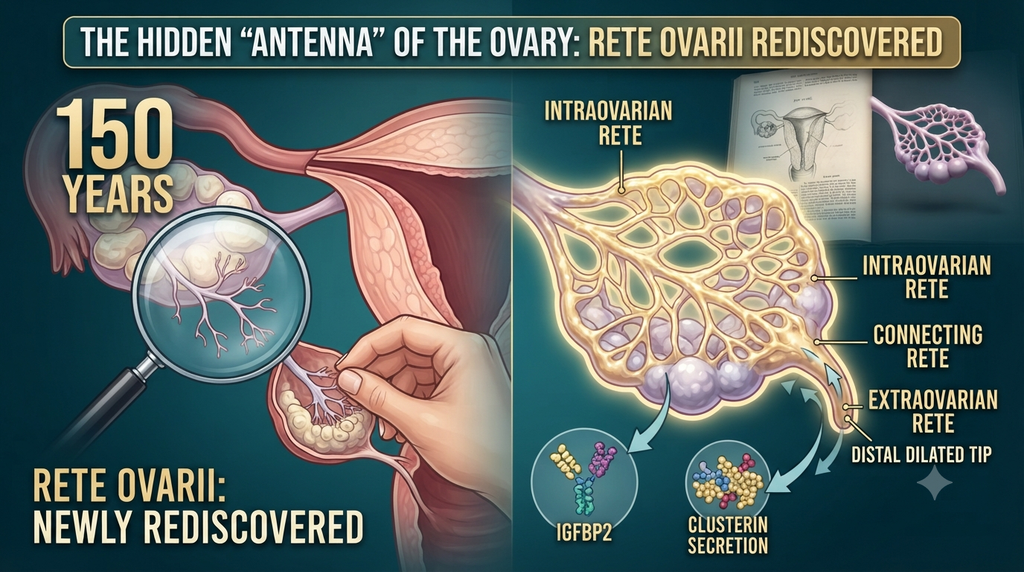
Now, thanks to breakthrough 3D imaging, molecular mapping, and protein analysis, reproductive biologists have staged one of anatomy’s most exciting comebacks. Far from being a useless evolutionary relic, the rete ovarii is emerging as a dynamic, secretory, and sensory appendage—an “antenna” that actively communicates with and supports the ovary.
Page 1: Anatomy of a Forgotten Structure
To understand why the rete ovarii was misunderstood for so long, you have to look at how traditional anatomy was studied. For over a century, researchers examined organs by slicing them into paper-thin 2D sections. When you slice a tangled, three-dimensional tube, it looks like a collection of disconnected, random circles. Without seeing the whole picture, anatomists assumed the rete ovarii degenerated into scattered debris.
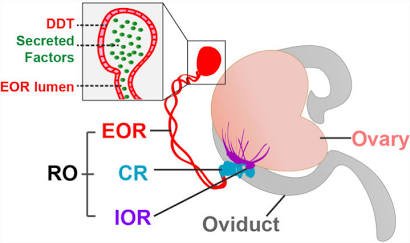
By using whole-organ 3D lightsheet and confocal microscopy—alongside specialized fluorescent markers like PAX8—research teams led by Blanche Capel at Duke University Medical Center and Jennifer McKey at the University of Colorado Anschutz Medical Campus were finally able to view the intact organ in its native environment. What they found was not a broken remnant, but a continuous, highly organized, three-part anatomical system that persists well into adulthood:
- The Intraovarian Rete (IOR): Located inside the ovary itself, this region is made of solid, branching cords of squamous epithelial cells (roughly one to three cells thick). During early development, these cords are closely linked to the formation of ovarian follicles—the tiny fluid-filled sacs that nurture immature eggs.
- The Connecting Rete (CR): Acting as a biological bridge, this middle section links the inside of the ovary to the outside world. Marked specifically by a protein called GFRa1, its cells gradually transition from solid cords into a hollow, tubular architecture by the time of birth.
- The Extraovarian Rete (EOR): Sitting just outside the ovary, this is the largest and most intricate part of the organ. Marked by the protein KRT8, it consists of a single, tightly coiled, convoluted tube of columnar cells that ends in a balloon-like pouch called the distal dilated tip (DDT).
| Region of the Rete Ovarii | Location | Key Molecular Marker | Primary Structure & Role |
| Intraovarian Rete (IOR) | Inside the ovary | PAX8+ | Solid cell cords linked to early ovarian development and follicle maturation. |
| Connecting Rete (CR) | Border/Bridge | PAX8+, GFRa1+ | Transitional tubular bridge connecting external tubules to the ovarian interior. |
| Extraovarian Rete (EOR) | Outside the ovary | PAX8+, KRT8+ | Convoluted, ciliated secretory tubule ending in a distal dilated tip (DDT). |
Page 2: A Secretory Pump and Sensory Hub
Discovering that an organ still exists in adults is one thing; proving it actually does something is another. To uncover the rete ovarii’s job, first author Dilara Anbarci and her colleagues looked closely at the cellular machinery inside the extraovarian rete—and what they saw stunned them.
The cells lining the coiled tubules of the extraovarian rete are covered in cilia (microscopic hair-like projections that beat in waves to move fluid) and packed with cellular machinery designed for packaging and shipping proteins, including components of the SNARE complex used in vesicular secretion. Even more tellingly, the surrounding tissue is wrapped in smooth muscle, threaded with a dense network of blood vessels, patrolled by immune cells (macrophages), and directly touched by nerve projections.
Testing the Flow
To test whether this structure actually sends signals into the ovary, the researchers performed delicate microinjection experiments, placing tiny droplets of fluid directly into the bulbous distal dilated tip (DDT) of the extraovarian rete. When they tracked the fluid, they watched it travel purposefully through the coiled tubules, across the connecting rete, and directly toward the ovary.
Using mass spectrometry to analyze the contents inside the lumen (the hollow interior) of the extraovarian rete, scientists identified a rich cocktail of secreted proteins crucial for maintaining ovarian balance and tissue health (homeostasis). Among the standout molecules were:
- Insulin-like growth factor-binding protein 2 (IGFBP2): A key regulator that controls how growth factors behave during follicle development.
- Clusterin: A protective protein involved in cellular stress response, tissue remodeling, and reproductive homeostasis.
Why This Discovery Matters for Women’s Health
As reproductive biologists Yan Zhang and Hua Zhang highlighted in their eLife insight commentary, rediscovering the rete ovarii forces medicine to rethink how the ovary is regulated. Historically, ovarian biology has focused almost entirely on internal ovarian cells and circulating hormones from the brain. The realization that an external, nerve-connected, fluid-pumping organ sits right next to the ovary—acting almost like a sensory antenna that detects environmental or physiological cues and secretes regulatory proteins directly into the ovary—opens entirely new avenues in reproductive medicine.
While much of the detailed 3D mapping so far has focused on fetal and early postnatal mouse models (and earlier studies showed that follicles can still initially form if the embryonic precursor tissue is removed, proving the rete ovarii is an auxiliary supporter rather than a sole creator), its persistence and active secretory profile in adults raise urgent questions. Could dysfunction in the rete ovarii contribute to unexplained infertility, premature ovarian aging, or ovarian disorders like Polycystic Ovary Syndrome (PCOS)?
For over a century, female reproductive anatomy suffered from blind spots—structures dismissed as irrelevant before modern science ever bothered to look closely. With the rete ovarii officially back on the anatomical map, researchers finally have a brand-new piece of the fertility puzzle to explore.
Sources & Author Credits
- Primary Research Study (eLife):Rediscovering the rete ovarii, a secreting auxiliary structure to the ovary
- Authors: Dilara N. Anbarci, Jennifer McKey, Daniel S. Levic, Michel Bagnat, and Blanche Capel (Department of Cell Biology, Duke University Medical Center; Section of Developmental Biology, Department of Pediatrics, University of Colorado Anschutz Medical Campus).
- Scientific Commentary (eLife Insight):Ovarian Biology: Revisiting the rete ovarii
- Authors: Yan Zhang and Hua Zhang (State Key Laboratory of Agrobiotechnology, College of Biological Sciences, China Agricultural University, Beijing, China).
- Science News Report (Live Science):‘Useless’ female organ discovered over a century ago may actually support ovaries, study finds
- Author: Jess Thomson (Live Science).
- News Feature (Deccan Herald): Women in rage: Scientists re-discover a 150-year-old female organ dropped from medical books (Note: Direct automated extraction from Deccan Herald’s webpage was restricted by site access controls, so all scientific facts above were verified directly from the primary eLife publications and Live Science reporting).

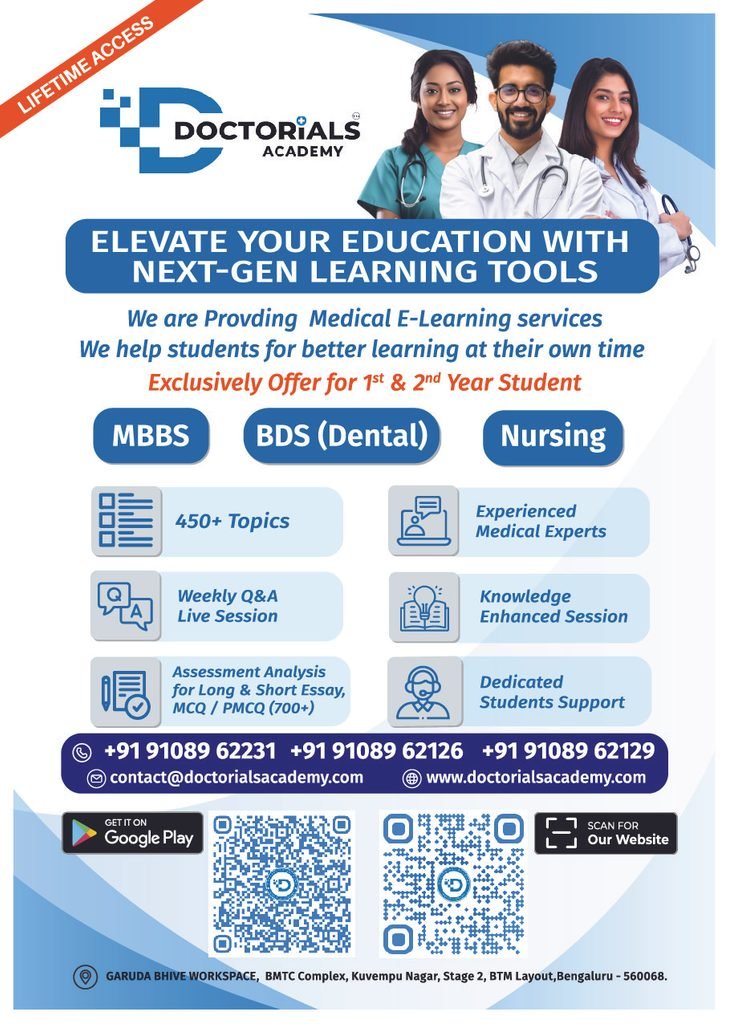
Doctorials Academy provides structured, online academic support programs specifically designed for 1st-year and 2nd-year MBBS, BDS, and B.Sc. Nursing students. The courses are aligned with Indian university syllabi and regulatory guidelines from the National Medical Commission (NMC), Dental Council of India (DCI), and Indian Nursing Council (INC).
Subject & Syllabus Coverage by Stream
| Stream | 1st Year Subjects Covered | 2nd Year Subjects Covered |
| MBBS | • Anatomy: Gross Anatomy, Histology, Embryology, Osteology, Radiology • Physiology: General Physiology, Blood, CVS, Respiratory, GI Tract, CNS • Biochemistry: Biomolecules, Enzymes, Metabolism, Nutrition, Clinical Biochemistry | • Pathology: General & Systemic Pathology, Hematology, Neoplasia • Microbiology: Bacteriology, Virology, Parasitology, Immunology • Pharmacology: General Pharmacology, Autonomic, CNS, CVS Drugs, Chemotherapy • Forensic Medicine: Medical Jurisprudence, Toxicology |
| BDS | • General Human Anatomy (including Embryology & Histology) • General Human Physiology & Biochemistry • Dental Anatomy & Oral Histology | • General Pathology & Microbiology • Pharmacology • Dental Materials • Preclinical Conservative Dentistry & Prosthodontics |
| B.Sc. Nursing | (Structured Semester-Wise: Sem I & II) • Anatomy & Physiology • Nutrition & Biochemistry • Nursing Foundations • Microbiology • Psychology, English & Computer Applications | (Structured Semester-Wise: Sem III & IV) • Medical-Surgical Nursing – I • Pharmacology & Pathology • Community Health Nursing – I • Sociology • Communication & Educational Technology |
Key Program Features & Learning Methodology
- Recorded Video Library: 24/7 access to HD recorded lectures covering 650+ high-yield topics, allowing students to learn at their own pace across mobile, tablet, or desktop.
- Weekly Live Q&A & Doubt Clearing: Regular live interactive sessions with experienced medical, dental, and nursing faculty to simplify complex topics and reinforce syllabus concepts.
- Exam & PG Entrance Preparation: Includes 700+ subject-wise MCQs, quizzes, and assessment analyses covering university patterns (Long Essays, Short Essays) alongside early foundational prep for NExT, NEET PG, and INI-CET.
- Practical & Clinical Integration: Demonstration videos, clinical case discussions, and OSCE-style assessments tailored to support hands-on lab and clinical learning, particularly for BDS and Nursing students.
- Knowledge Enhancement Sessions: Specialized guidance sessions covering advanced clinical perspectives (such as dissection, surgery, and anesthesia) and post-graduation career pathways.
- Personal LMS & Progress Tracking: A dedicated Learning Management System dashboard that tracks study hours, syllabus completion, and quiz performance, backed by lifetime access to learning resources and dedicated student support.
Course Structure & Pricing Overview
- Modular Enrollment: Students can enroll on a yearly basis (e.g., MBBS 1st Year, MBBS 2nd Year, BDS 1st Year, BDS 2nd Year) or semester-by-semester for B.Sc. Nursing (Semesters I through IV).
- Fee Range: Individual annual or semester modules are listed at a discounted promotional rate of ₹4,999 (standard MRP ₹12,000) on the official platform.
BUY NOW: https://doctorialsacademy.com/medical-courses/

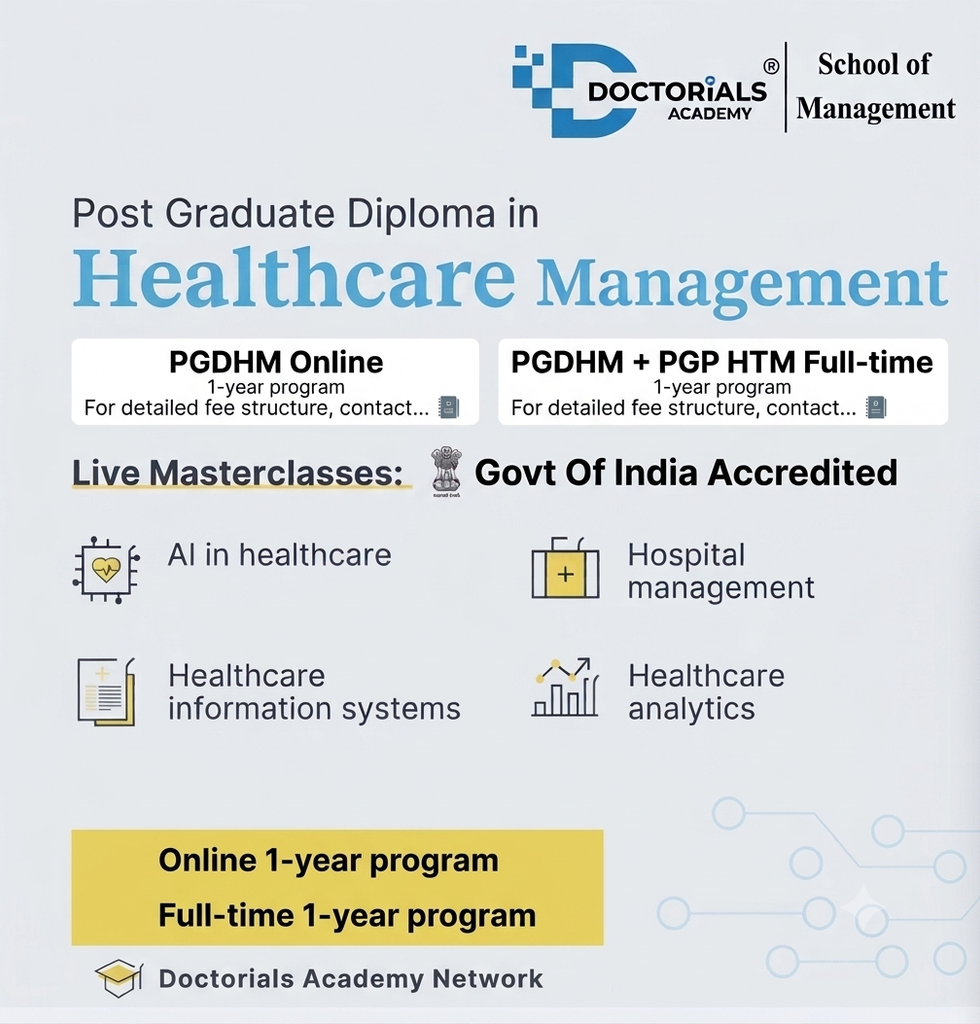
Transform Your Medical Career: Post Graduate Diploma in Hospital Management (PGDHM) at Doctorials Academy
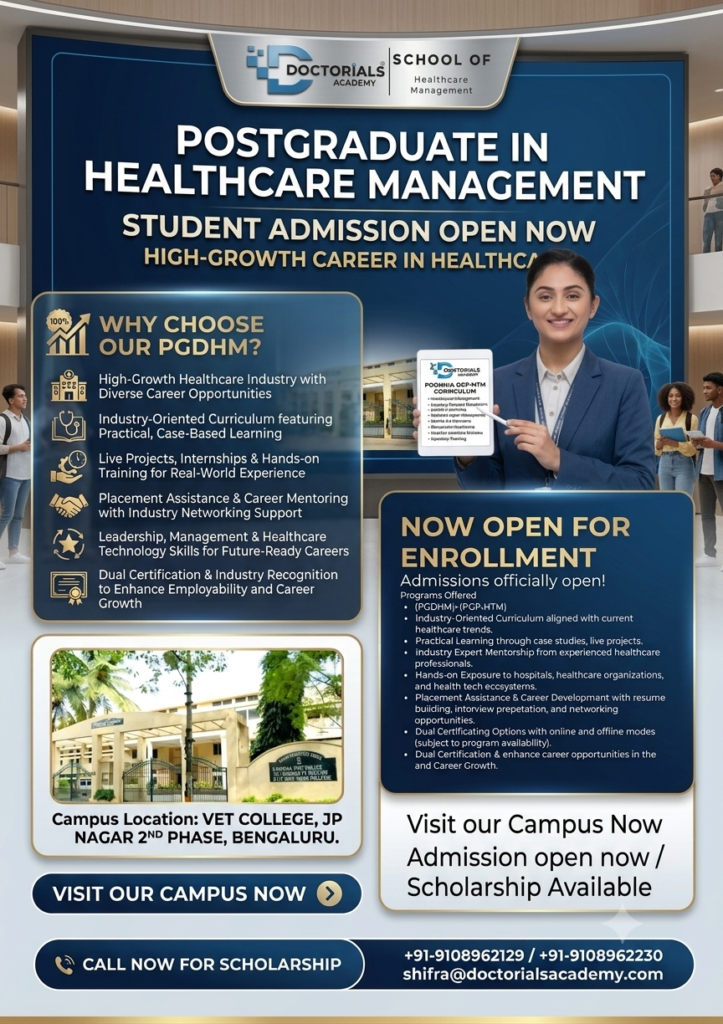
Step into the booming world of healthcare leadership with the PGDHM program offered by Doctorials Academy. Designed specifically to bridge the massive gap between clinical expertise and executive management, this power-packed program is your definitive launchpad into modern hospital administration, healthcare consulting, and health-tech leadership.
🌟 Why Choose the PGDHM Course by Doctorials Academy?
- Government-Recognized Credential: Officially validated and structured in collaboration with Medhavi Skills University (MSU), ensuring your qualification meets national skills standards and carries high industry weight.
- Designed for Healthcare Professionals: Tailored for MBBS, BDS, BAMS, BHMS, Nursing, Pharmacy, and allied health graduates who want to pivot from bedside care to boardroom leadership.
- Blended Learning Ecosystem: Enjoy the flexibility of live online instruction, immersive self-paced LMS modules, and high-impact offline bootcamps.
- Mentorship by Industry Giants: Learn directly from seasoned hospital CEOs, veteran administrators, and NABH accreditation auditors.
- Robust Placement Support: Leverage Doctorials Academy’s strong corporate network for dedicated internship placement and career opportunities in top-tier hospital chains, pharma firms, and healthcare startups.
📚 Comprehensive, Cutting-Edge Curriculum
The program combines traditional business administration pillars with specialized healthcare modules to make you completely industry-ready from day one:
- Hospital Operations & Facility Management: Master day-to-day hospital functioning, utilities, security services, and equipment maintenance.
- Quality Management & Accreditation: Deep dive into safety protocols, patient care standards, and NABH compliance.
- Healthcare Financials & Accounting: Learn double-entry bookkeeping, management accounting, financial reporting, and asset analysis tailored for medical institutions.
- Medical Law & Ethics: Navigate complex legal frameworks, patient rights, and regulatory policies governing modern hospitals.
- Digital Health & Healthcare IT: Explore Electronic Health Records (EHR), telehealth systems, and the integration of AI in healthcare management.
- Strategic Human Resources: Master healthcare manpower planning, wage administration, and personnel development specific to medical environments.
🎯 Who Is This For?
- Clinicians & Graduates: MBBS, BDS, Nursing, and AYUSH graduates looking to fast-track their rise to Hospital Administrator or Operations Head.
- ambitious Intermediates: Healthcare professionals wanting to transition into medical tourism, health insurance (TPAs), healthcare consulting, or digital health startups.
Take charge of your professional destiny, command high-impact leadership roles, and shape the future of medical delivery with Doctorials Academy’s PGDHM!
The eligibility criteria officially accept a wide range of undergraduate backgrounds:
Other Undergraduate Disciplines: Graduates from Engineering, Management, Commerce, or Arts who are looking to transition into healthcare administration, hospital operations, or health-tech management
Medical & Dental Degrees: MBBS, BDS, BAMS, BHMS, BUMS (Allopathic, Ayurvedic, Homeopathic, Unani, etc.)
Nursing Qualifications: B.Sc. Nursing, Post Basic B.Sc. Nursing, or GNM (General Nursing and Midwifery with relevant experience)
Pharmacy & Life Science Degrees: B.Pharm, Pharm.D, and B.Sc. degrees (such as Biochemistry, Microbiology, Medical Laboratory Technology [MLT], Biotechnology, etc.)
Allied Health & Paramedical Courses: Graduates from recognized paramedical and healthcare disciplines
APPLY NOW: https://doctorialsacademy.com/pgdhm/